On April 28, 2026, Anthropic shipped 9 first-party Claude integrations for the entire creative-software stack (Adobe, Blender, Ableton, Autodesk Fusion, SketchUp, and 4 more) and joined the Blender Development Fund as a corporate patron. If you sell software to small businesses, the pattern is simple. Ship an MCP server. Let your customers' Claude touch your data. Or watch the next wave route around you.
If you sell software to small businesses, last week was the loudest signal you are going to get this year about where the market is heading. Anthropic, the company behind Claude, did not just announce a new model or a price cut. They shipped a coordinated package of integrations into nine of the most-used creative tools on the planet. Then they wrote a check to one of those tools to keep the underlying open-source code healthy.
That is not a product launch. That is a platform play.
This post is for two people. One, the founder running an SMB software product right now, looking at this news and wondering if it changes anything. (It does.) Two, the operator buying software for your business, trying to figure out which vendors are going to still be around in three years. Same answer, different question.
We are going to cover what Anthropic actually shipped, what the Model Context Protocol is in plain English, why the AI-native software pattern is suddenly the only thing that matters in SMB SaaS, and the five concrete steps to ship the same pattern in your own product.
What Anthropic Actually Shipped on April 28
On April 28, 2026, Anthropic released a package called Claude for Creative Work. It is nine first-party connectors that let Claude read and write directly to professional creative software.
Ableton grounds Claude's answers in official Ableton Live and Push documentation so music producers get correct technique answers without leaving the app. Adobe for Creativity lets Claude work across 50+ Creative Cloud apps including Photoshop, Premiere Pro, After Effects, and Illustrator. Affinity by Canva automates batch adjustments, layer renaming, and other production work in pro design files. Autodesk Fusion is text-to-CAD, where you describe a part in plain English and get manufacturable 3D geometry. Blender exposes natural-language access to Blender's Python API for scene analysis, scripting, and batch object modification. Resolume Arena and Resolume Wire give VJs and AV operators real-time control of live visual systems through plain-English commands. SketchUp turns conversations into starting points for 3D modeling projects. Splice lets music producers search and pull royalty-free samples from inside Claude.
Two extra moves around the announcement matter as much as the list itself.
First, Anthropic joined the Blender Development Fund as a Corporate Patron, with the funding aimed at Blender's Python API and core development. They did not just ship an integration. They put money behind the open-source code their integration depends on.
Second, all of these are built on the Model Context Protocol, which means none of them are Claude-only. Any AI model that speaks the protocol can plug in. Anthropic just paid to be first.
My read on this is straightforward. Anthropic is acting like a platform company, not a model company. The Blender Development Fund move is the giveaway. A model company protects its model. A platform company funds the surface area its customers run on, then competes on the layer above. We have been making the Claude-native bet at Vaught AI for about a year, mostly because of how the API has held up under real production load on our own client builds. Last week was the first time the public market got to watch Anthropic explicitly act like Microsoft does, and not like a frontier-model startup. If you are an SMB owner trying to pick which AI vendor to commit to for the next three to five years, bet on the company funding the substrate. That is how you do not end up rebuilding in 2028.
What Is the Model Context Protocol (MCP)?
The Model Context Protocol, or MCP, is the open standard that lets AI models read and write your business data through a documented API. It was originally created by Anthropic and is now governed by the Linux Foundation.
The clearest analogy is USB. Before USB, every printer, mouse, and external drive needed its own custom cable and driver. USB was one standard. Plug anything into anything. MCP is the same idea for AI. Build one MCP server for your software, and every AI tool that speaks the protocol can drive it.
That includes Claude. It also includes ChatGPT, Cursor, and any other AI client that wires up to MCP.
A few practical things to know. An MCP server is a small piece of code that exposes some of your software's actions (read a record, update a status, run a query) through the standardized MCP API. A connector is a vendor-supported MCP server with a tested install flow and product docs. Anthropic shipped 9 of those last week. As of early 2026, Anthropic maintains 75+ in their official directory.
The protocol is open-source. You can build your own, host it yourself, and your customers can point any AI tool at it. You do not owe Anthropic a dime to ship one.
That last point is why this is a platform play, not a vendor lock-in. Every SaaS that ships an MCP server makes the standard more useful. Every connector Anthropic ships gives every AI vendor a reason to support MCP. The flywheel runs on volume, not exclusivity.
AI-Native vs SaaS With AI Features (the Only Frame That Matters)
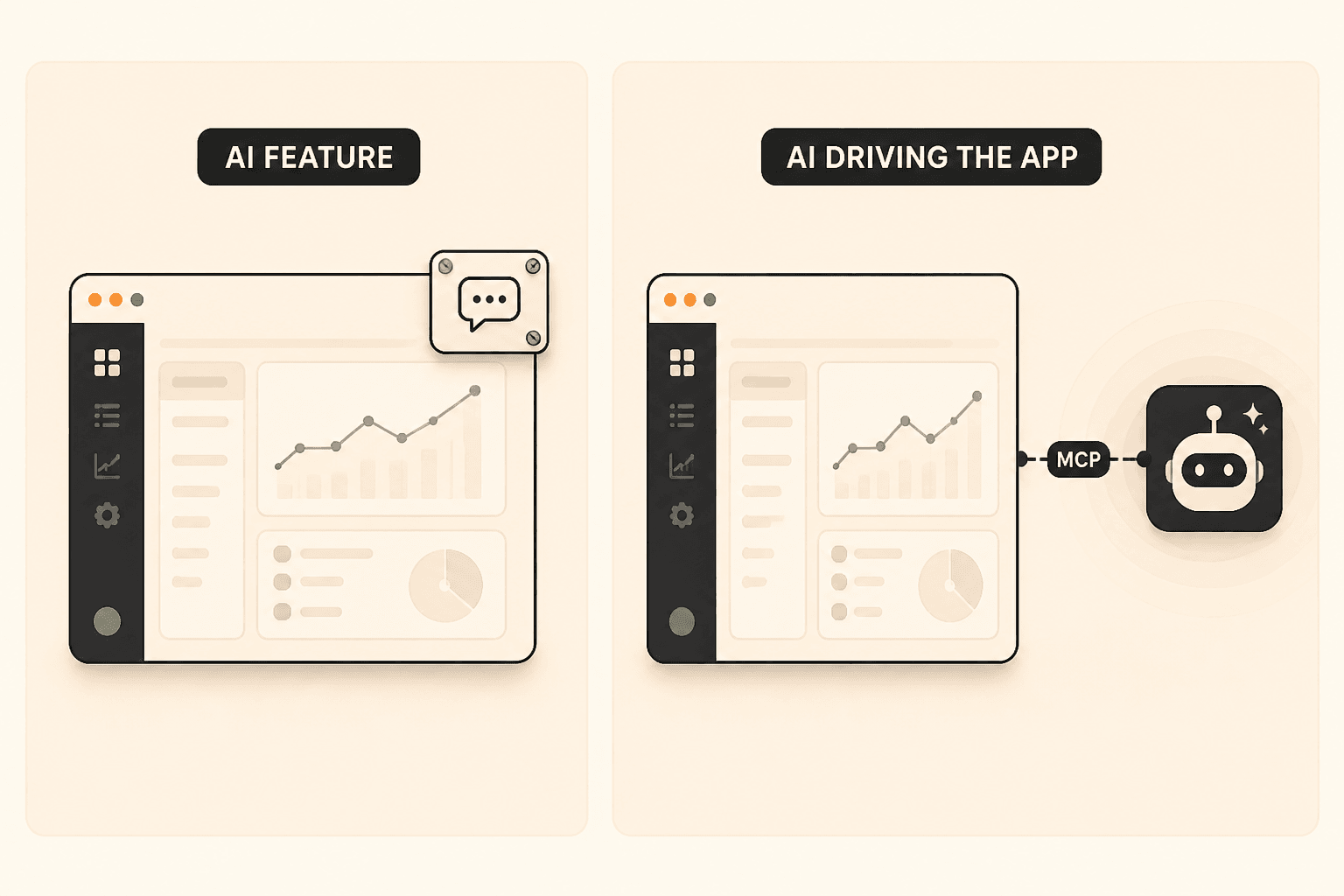
This is the single most important distinction for any software founder right now. Most "AI" announcements you see from SaaS vendors are bolt-ons. A summarize button. A chatbot in the corner. Maybe an auto-tag feature. Useful, optional, ignorable. Customers can turn them off and the product still works the same way.
AI-native software is different. The customer's AI tool is part of the product. They use Claude or ChatGPT to drive the workflow inside your app, and your app cooperates with their AI through MCP. Turn the AI off and the product is still functional, but the experience changes from "I open this app to do work" to "I tell my AI what I want and the app does it."
In a SaaS-with-AI-features model, you might have a "Summarize meeting" button inside your app. A useful add-on. Customers might use it. They might not. In an AI-native model, the customer's Claude reads the meeting transcript from your app, summarizes it, files action items into your task system, all in one prompt. The app becomes part of the customer's AI workflow. They do not even have to open it.
The Trimble + SketchUp connector is the canonical example. An architect does not open SketchUp anymore to start a model. They tell Claude "build me a 30 by 40 single-story building with a 4:12 sloped roof," and Claude drives SketchUp to do it. SketchUp did not disappear. It became the backend of the architect's AI workflow.
If you sell software, ask yourself the question Trimble asked. What does it look like when our customer's AI does the work inside our app, and we cooperate?
Why Anthropic Funded the OSS Substrate (and Why VS Code Is the Right Analogy)
Most vendors selling AI products are racing to lock customers in. Better model. Bigger context window. Proprietary tool format. Anthropic just did the opposite. They paid into Blender's Development Fund to keep the open-source code their integration depends on healthy.
This is the Microsoft + VS Code play.
Microsoft built VS Code on Electron, an open-source framework. They funded core Electron development. They open-sourced VS Code itself. They built the extension marketplace as an open standard. The result was VS Code became the default code editor on the planet, and Microsoft sold $300M+ in GitHub Copilot subscriptions running on top of it.
The pattern is to be the platform layer. Fund the substrate. Make money on the layer above.
Anthropic is running the same play with MCP and creative software. Fund the open-source tools. Make MCP an open standard. Ship the best connectors. Sell Claude on top.
For a small business buying software in 2026, this changes the long-term bet. Vendors that ship MCP connectors and stay on the open standard will compose with whatever AI tool you end up using in 2028. Vendors building proprietary "AI features" that only work with their walled-garden chatbot are betting you will still be using their chatbot in 2028. That is a bet I would not take.
When I am sitting in front of a small-business owner who asks me "why Claude over GPT," my answer used to be "because the API has been more stable for the kind of production work I do." Now I have a second answer. Anthropic just put money into the open-source software their integration depends on. That is a posture you can read forward. They want their model to compose with the long tail of software the world actually uses, including stuff they do not own. OpenAI may end up doing the same thing. They have not yet. Two weeks after this post shipped, Anthropic gave us the second confirmation by putting the Agent SDK on a meter. Until they do, the company writing checks to Blender is the company I trust with my client builds for the next three years.
The Pattern Your SaaS Should Ship (5 Plain-English Steps)
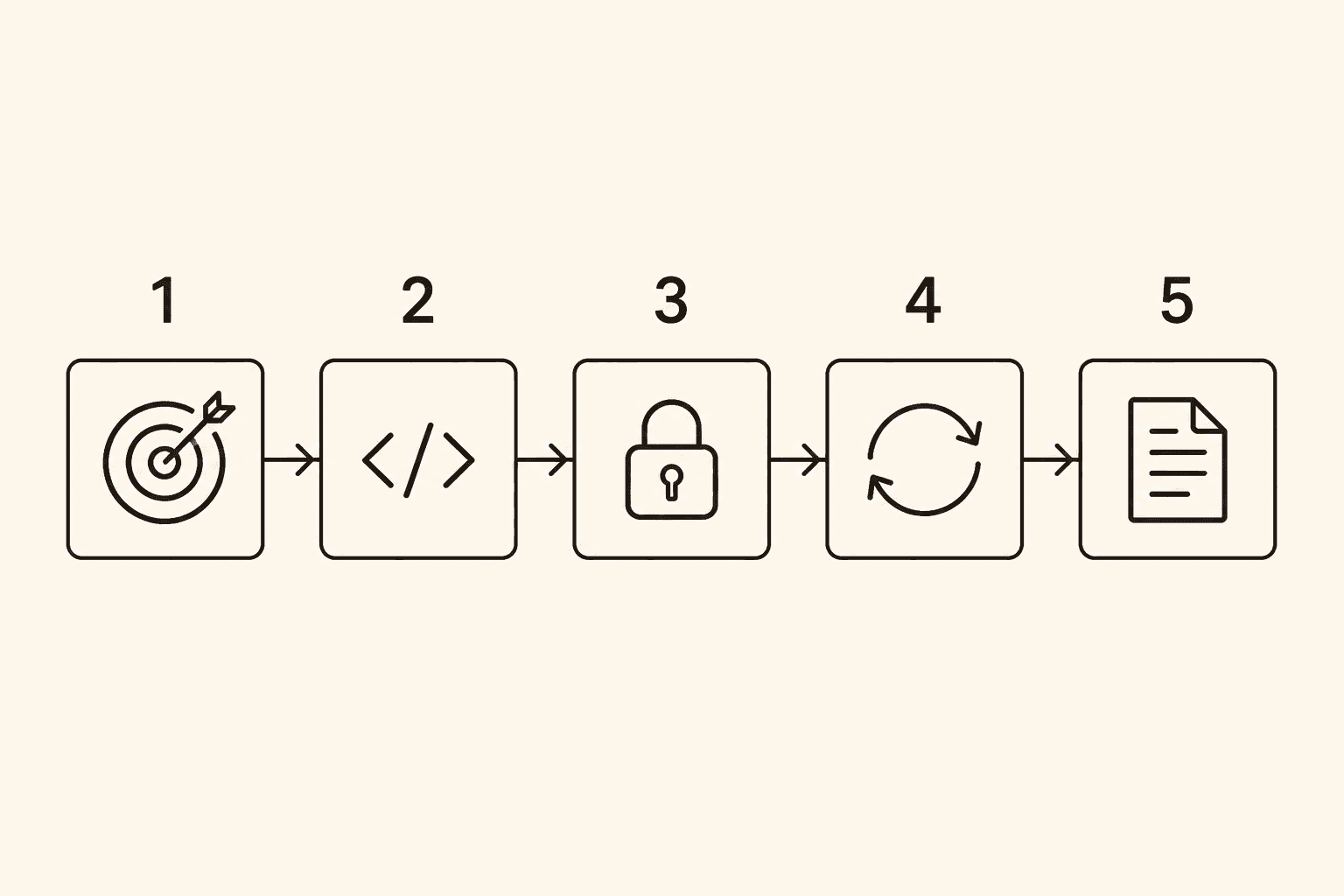
If you ship SMB software, here is the 5-step path to AI-native. None of these require a research team. They require a Friday afternoon and a clear answer to "what do customers want our software to do."
1. Pick the 3 actions a customer most wants Claude to do in your app. Not 30. Three. The mistake most teams make is exposing every API endpoint and calling it an MCP server. That is a worse version of your existing API. Instead, ask sales and support what customers ask Claude to do that they wish your app would handle. The top three are usually the same in every SMB SaaS: read a list of records with a filter, update a record's status, kick off a workflow with a name.
2. Build an MCP server that exposes only those actions. The Anthropic SDK and a half-dozen open-source frameworks (modelcontextprotocol/servers, MCP-Framework in TypeScript, FastMCP in Python) make this a couple-hundred-line project. The server is a thin translator. It takes the standardized MCP request from the AI tool, calls your existing API or database, and returns the result. You do not need to rewrite your app. You are putting a small adapter in front of it.
3. Wire authentication through your existing OAuth or API key system. Do not invent a new auth scheme. Customers already authenticate to your app. The MCP server reuses that. The pattern most production deployments use is a server-side proxy (Cloudflare Workers is the cheapest path) handling the OAuth token exchange and forwarding the authenticated request. Setup time is roughly two hours.
4. Test the round-trip with a real customer's Claude. Read works. Write works. The audit trail logs which AI did what and when. You want all three before you ship publicly, because the moment a customer's Claude can write to your database, the audit trail is the only thing standing between you and a support nightmare.
5. Ship the connector with installation instructions in your product docs. Not a press release. A docs page. The Anthropic connectors all live in the Claude.ai connector directory plus a 2-minute install flow on the vendor's own site. That is the bar. If your customer cannot install your connector and have it working in under 5 minutes, your competitor's connector will get used instead.
The whole loop is a 1 to 2 week project for a small team. The cost to not ship it is that your competitor does, and now their software composes with the customer's AI workflow and yours does not.
What It Looks Like When We Build It (CureCore + Meridian Shield)
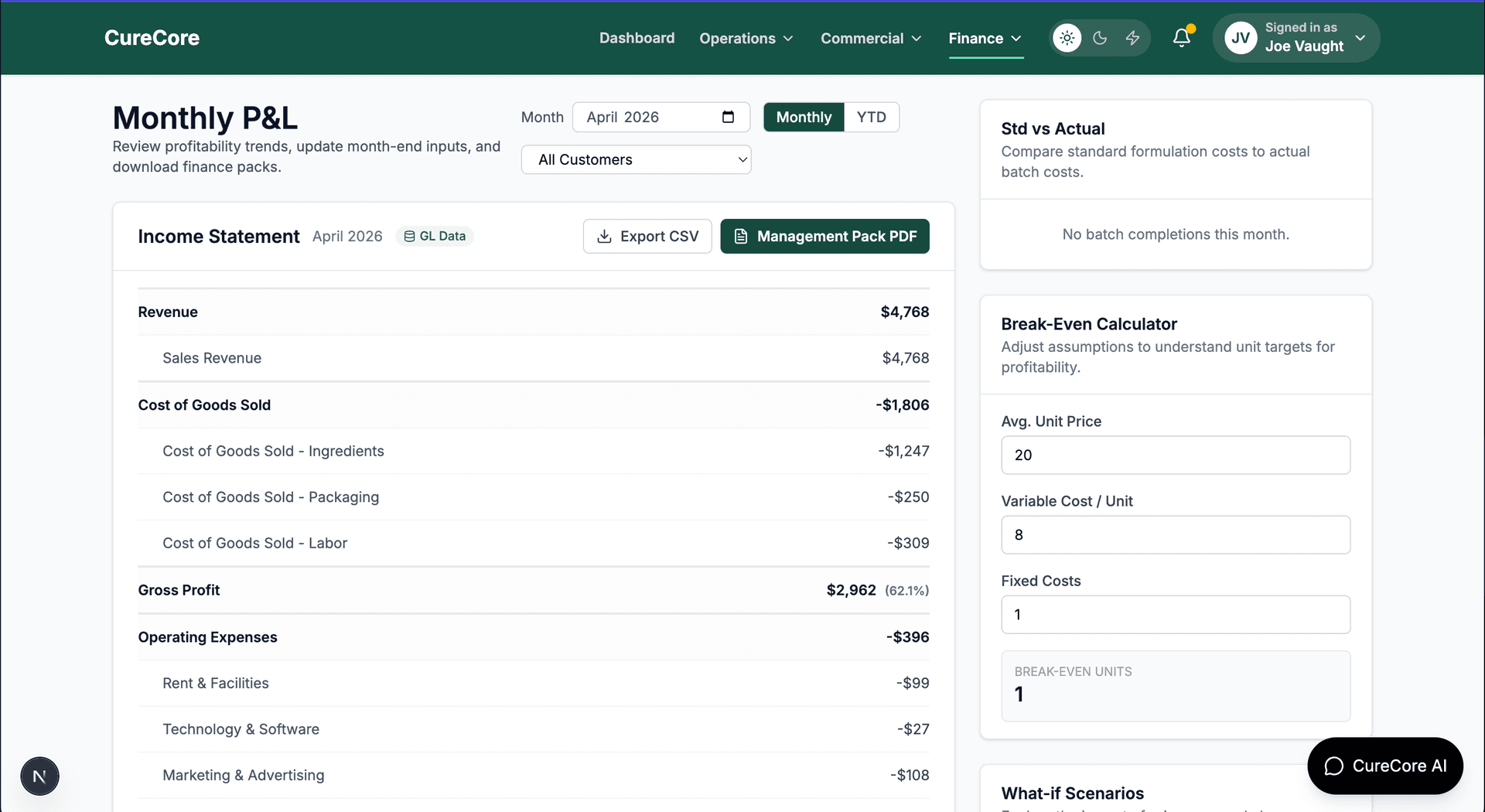
I run a manufacturing operation called Cure Rituals that ships premium organic CBD products. The software it runs on is CureCore, a manufacturing OS I built from scratch because nothing on the market fit how my own business actually worked. CureCore saves the operation 45+ hours per week of manual coordination work. Real numbers, in my own plant, every week.
When I think about adding an MCP layer to CureCore, the question is not "is this technically hard." It is "which three actions matter most." For a CBD manufacturer that is roughly: pull a Certificate of Analysis (COA) from the document archive by SKU, update a batch record's QA status, and trigger a co-packer work order. Three actions. Maybe a week of build time. Customer's Claude could now run my plant from a chat window.
Honest answer though. The first version is for me, not the market. CureCore runs my own manufacturing operation. The harder question is whether to make the connector public so other CBD or supplements operations could license CureCore as software. That is a different business decision. Opening it up requires the kind of customer-support and onboarding work I have not said yes to yet. Build the MCP layer for myself first. Run it for six months. Decide whether to open it up after the seventh. That is the call I would give any other operator who built their software for their own business and is now wondering if it is a product.
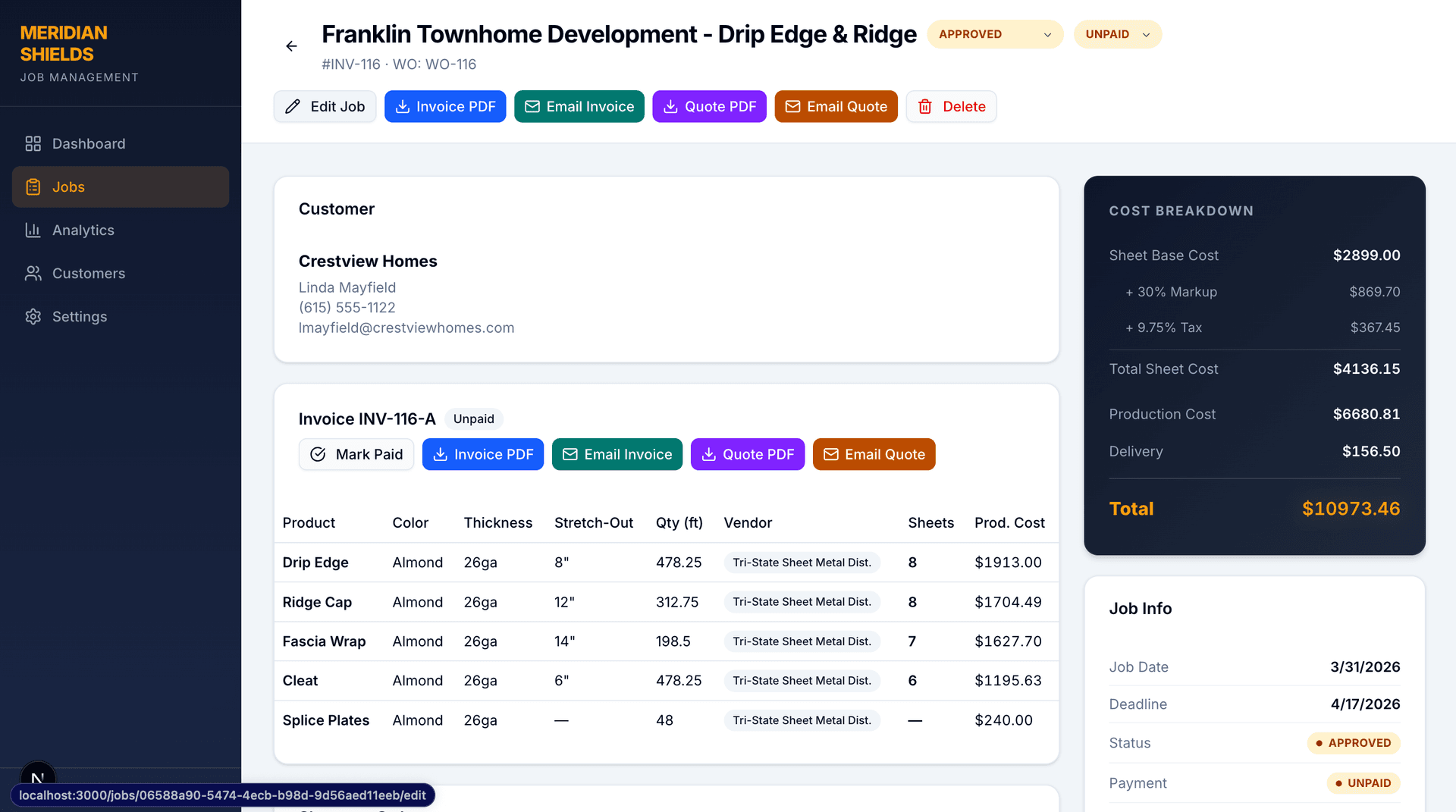
The other live build is for Meridian Shield, an Oklahoma metal fabricator that ships drip edge and architectural metal at scale. We built them an instant-quote engine that turned a 30 to 60 minute manual quoting workflow into something the shop can do in under 5 minutes, three times a day. They paid for the build in their first month of using it.
The quote engine reads measurements from a customer email, pulls multi-supplier material pricing, applies Meridian's pricing rules, and outputs a PDF quote ready to send. That is exactly the kind of workflow that becomes more valuable when the customer's Claude can drive it. A general contractor types "get me a drip edge quote on this project" into their AI, and Meridian's MCP server returns the quote without the GC ever opening Meridian's app.
When we wired Meridian's quote engine in late 2025, we were not specifically thinking about MCP. The goal was to take a 30-to-60-minute manual quoting workflow down to under 5 minutes. We built it for the human at the keyboard. The MCP angle did not become obvious to me until the Trimble announcement on April 28. What I will say is that the architecture we used, with clean separation between pricing logic, the supplier data layer, and the PDF output, makes a Meridian MCP server an afternoon of work, not a rebuild. Good architecture pays compound interest. That is the lesson every operator-builder eventually learns.
A third build for Noble Fire and Safety (the platform is built and deployed but the master service agreement is still under review, so we are talking architecture and projections here, not live client outcomes) demonstrates the same shape on a different vertical. Inspection recall cadence, AR follow-up, after-hours intake, compliance document generation. Each of those is a standalone automation. Each of them gets more useful when an MCP server lets the customer's Claude trigger or read from them.
The point is not "we built this for clients." The point is the pattern is the same as Trimble's pattern. The 9-connector wave is not a creative-software story. It is the canonical reference architecture for any software product that wants to compose with the customer's AI.
Why the 9-Connector Wave Matters Even If Your Customer Never Touches Blender
You might be reading this thinking "I sell software to plumbers" or "I sell software to lawyers" or "I sell software to dental clinics." Why does Adobe and Blender matter to me?
Because the pattern does not care about your vertical. Anthropic ran the play with creative software because the user base is technically sophisticated, the workflows are well-defined, and the integration partners are public companies with the engineering bench to ship in 30 days. They did not pick creative because creative is the future. They picked creative because creative is the easiest place to prove the pattern.
Your industry is next.
Real estate has a thousand small CRMs and listing tools. Field service has dozens of dispatch and scheduling SaaS products. Manufacturing ERPs are everywhere. Legal practice management. Veterinary clinic software. Med spa booking platforms. Roofing measurement tools. Every one of those vertical software companies is going to face the same question Trimble faced in April. Ship an MCP connector and become part of the customer's AI workflow. Or do not, and watch their AI go around you.
The first SaaS in each vertical to ship a clean MCP connector wins the next 12 months of that vertical's AI conversation. The third or fourth gets ignored.
For our target verticals (manufacturing, fire and safety, field services, roofing, med spa, professional services), the timing is unusually clean. Almost no incumbent vertical SaaS has shipped MCP yet as of April 2026. The window to be first is wide open.
Claude for Creative Work, but for SMB Operators (the Vaught AI Bridge)
The companies that need an MCP layer the most are the ones running on software that does not have an Adobe or a Trimble building it for them. The vertical SaaS your business uses, the custom app your operator built five years ago, the spreadsheet workflow that is still load-bearing on your business. All of those want an MCP layer. None of them are getting one from their original vendor in 2026.
That is the gap we work in.
Vaught AI ships custom apps and AI-powered workflow automations for businesses doing $1M to $10M in annual revenue. The pattern Trimble validated, the pattern Anthropic just shipped 9 examples of, is the same pattern we ship for one client at a time. We extract the three actions a customer's AI most wants to do inside your business, build the MCP layer, and connect it to your existing systems.
If you are a software founder in an SMB-serving vertical, build your own connector. The 5 steps above are real. Most teams can ship the v1 in two weeks.
If you are an operator running on a stack of vertical SaaS and a custom app, the question is which workflow you would most want your AI to drive end-to-end. That is the 30-minute conversation we have on the free AI audit.
Common Mistakes (5 Things SMB Software Shops Are Getting Wrong About MCP Right Now)
The pattern is straightforward. The execution is where teams trip. Here are the five most common mistakes I am watching teams make in April 2026.
1. Building a chatbot when you should be shipping an MCP server. A chatbot inside your app forces customers to use your AI on your terms. An MCP server lets customers use whichever AI they are already using to drive your app. Customers prefer the second one. Always.
2. Exposing every endpoint instead of the 3 customers actually want. Your API has 200 endpoints. An MCP server with 200 tools is unusable by the AI on the other end (the model has to scan all of them on every call). Ship 3 to 7 well-defined actions.
3. Skipping the audit trail. When the customer's Claude writes to your database, you need to log who, what, when, and why. Not a nice-to-have. The first time something goes sideways and the customer asks "did your system or our AI mess this up," the audit trail is the only thing that resolves the conversation.
4. Treating MCP as a "future maybe" instead of a 2026 ship. The vendors who ship in Q2 2026 will be on the front of the next wave. The vendors who wait until Q1 2027 will be selling against three competitors who already shipped.
5. Trying to monetize the connector itself. Do not. The connector should be free. The value is that your software is now part of the customer's AI workflow and they are locked into your data, not your chatbot. Anthropic gave away 9 connectors for a reason.
Frequently Asked Questions
What is Claude for Creative Work?+
Claude for Creative Work is a package of 9 first-party AI integrations Anthropic shipped on April 28, 2026, covering Adobe Creative Cloud, Blender, Ableton, Autodesk Fusion, SketchUp, Splice, Resolume Arena, Resolume Wire, and Affinity by Canva. Each connector lets Claude read and write directly to the application using the Model Context Protocol.
What is the Model Context Protocol?+
The Model Context Protocol (MCP) is an open standard, originally created by Anthropic and now governed by the Linux Foundation, that lets AI models read and write your business data through a documented API. The clearest analogy is USB for hardware. Build one MCP server for your software, and every AI tool that speaks MCP can drive it.
What is the difference between AI-native and AI-powered software?+
AI-powered software is your existing app with a chatbot or summarize button bolted on. AI-native software is built so the customer's AI tool can drive the work inside the app through an MCP server. Turn the AI off and AI-powered apps still feel the same. Turn the AI off and AI-native apps lose their primary interaction model.
Should small businesses build their own MCP server?+
If you ship software to other businesses, yes. The 5-step pattern is a 1 to 2 week project for a small team. If you are a small business buying software, ask every vendor in your stack whether they ship one. The vendors who say yes or next quarter are the ones to bet on long-term.
How much does a custom Claude integration cost?+
For a vendor shipping their own MCP connector, the build is a 1 to 2 week sprint internally, no external cost. For an SMB operator wanting a custom MCP layer over their existing software stack, Vaught AI typically scopes these as part of a custom app build ($12K to $40K depending on complexity) or as a standalone automation engagement (starting around $5K). Get pricing dialed on a free 30-minute AI audit.
Can I use these connectors if I am not on Claude?+
Yes. MCP is an open standard. The Blender connector, the Autodesk Fusion connector, every connector in Anthropic's pack works with any AI tool that speaks MCP. Anthropic shipped them first. They do not own the standard.
What to Do This Week If You Sell Software
Three concrete actions, in priority order.
1. If you sell SMB software: Pull the 5-step list above. Pick your three customer actions. Scope a 2-week MCP server sprint with your team this week.
2. If you operate on SMB software: Open a doc, list every vendor in your stack, and write "MCP: yes / no / asked" next to each one. Email the "no" and the "asked" rows by Friday and ask their roadmap. The vendors who answer in 24 hours are the vendors to keep. The ones who do not know what MCP is are the ones to start migrating off.
3. If you want a second pair of eyes on either of those: Book the free 30-minute AI audit. I will walk through your stack or your product, point at the three workflows where MCP gets you the most time back, and tell you whether the play is to build it yourself or have us ship it.
The 9-connector wave is not a one-time announcement. It is the canonical reference architecture for the next 18 months of SMB software. The companies who ship the pattern in Q2 2026 are going to be the vertical winners by Q4. The companies who do not ship it in 2026 are going to spend 2027 explaining to their customers why their AI workflow goes around them.
Pick which side you want to be on.
30-minute call on Cal.com. We map the 3 workflows where MCP pays back fastest. No pitch.