Most metal fabrication shops doing $2M to $10M are still quoting by hand. AI quoting for metal fabrication is finally ready to fix that, but only if the system is built around how your shop actually quotes.
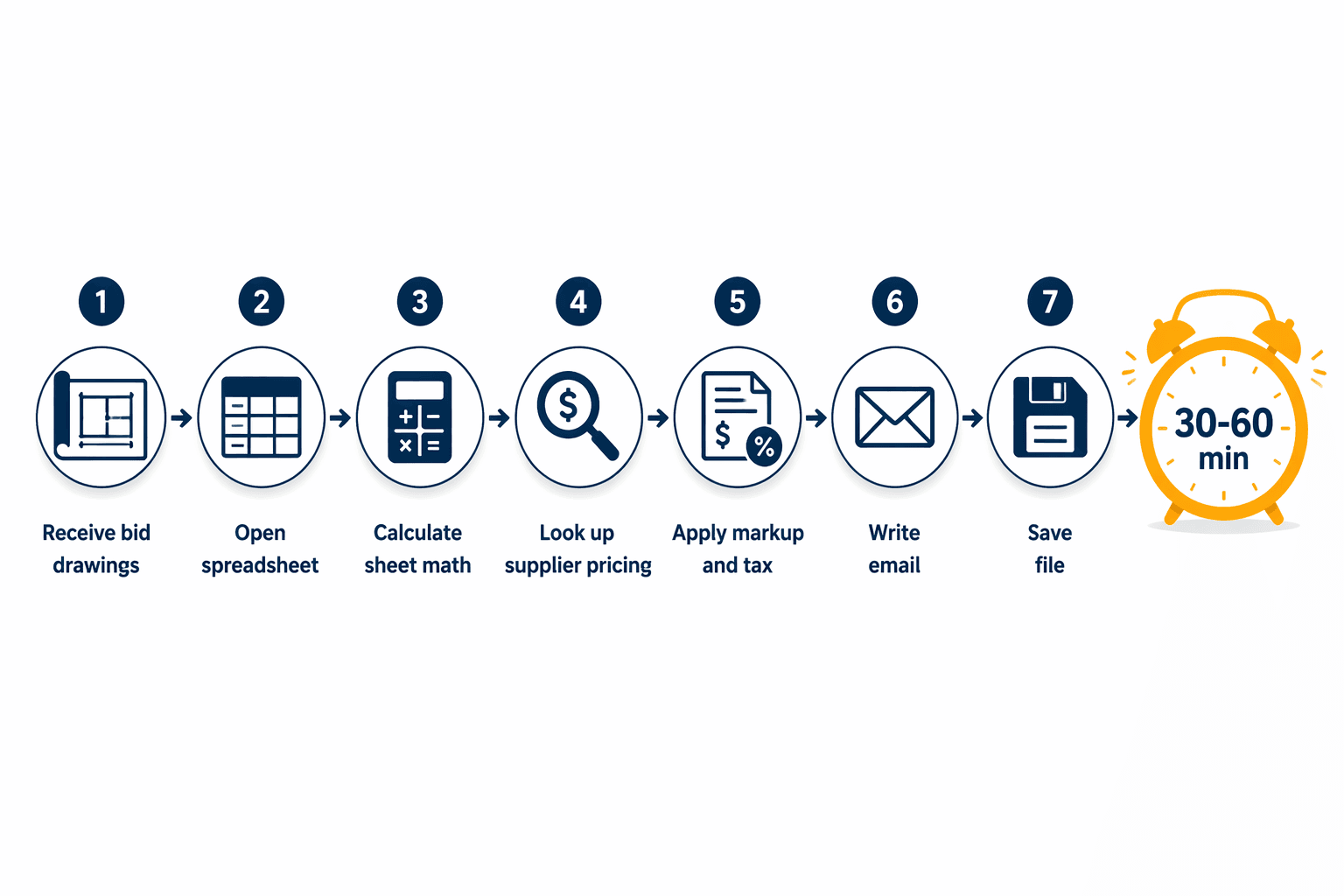
Someone opens a drawing, measures stretch-out, does the sheet math in a spreadsheet, looks up per-foot pricing, adds markup, types it into an email, and hits send. That cycle takes 30 to 60 minutes per quote on a good day. On a bad day, a miscalculation on sheet count eats the margin on a job that already shipped.
Meridian Shield is a custom commercial roofing edge metal fab shop, part of Trivan Roofing. They make drip edge, gutters, fascia, coping cap, cleats, and flashing. The kind of work where a $40K job can hinge on whether you quoted 47 sheets or 52. They came to us with a specific problem: quote volume was capped by how fast one person could do the math.
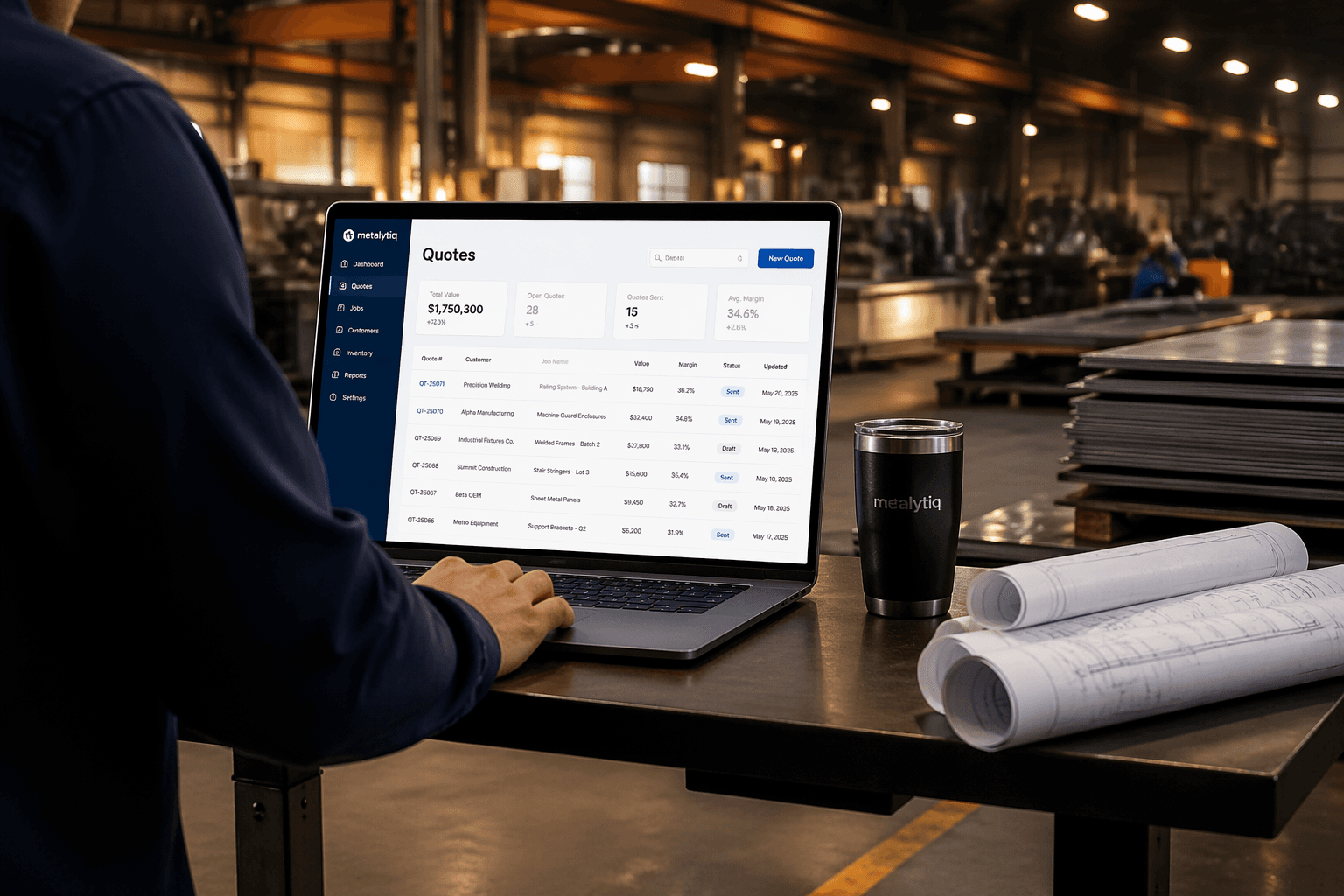
How I Ended Up Building This
The funny part is, the owner and I already knew each other. He was a customer at an earlier business of mine, years before I got into AI. He saw I was good with technology and eventually asked me to come work with him. While I was there, I kept automating little pieces of the day, either in person or from the house at night. He watched me do that for months. Eventually he asked if I could build him a real app.
I built one that went above and beyond what he asked for, because I could see how much he was struggling trying to run the whole operation off his phone and his memory. You can only hold so many sheet calculations in your head before something slips. That is the bottleneck we were hired to fix.
What a 30-Minute Quote Actually Looks Like
Before the system, a single quote involved:
1. Customer sends over a bid package with linear footage and profile specs.
2. Estimator opens a spreadsheet, looks up stretch-out for each profile.
3. Calculates pieces per sheet: floor(sheet width / stretch-out).
4. Calculates sheets needed: ceil(linear feet / (pieces per sheet times 10)).
5. Pulls sheet cost from the supplier list. Checks which vendor has capacity this week.
6. Applies 30% markup on material, 9.75% sales tax. Production cost stays separate with no markup or tax.
7. Adds delivery. Types it into an email. Saves a copy to Dropbox.
Thirty minutes minimum if nothing went wrong. And the math had to be right or the job lost money. Meridian was quoting five or six jobs on a good day. Competitors at that scale were getting to ten.
What We Built: A Custom AI Quoting System for Metal Fab
The system takes a job request and produces a priced quote in under five minutes. No spreadsheets. No manual sheet math. No cross-checking supplier prices in a separate tab.
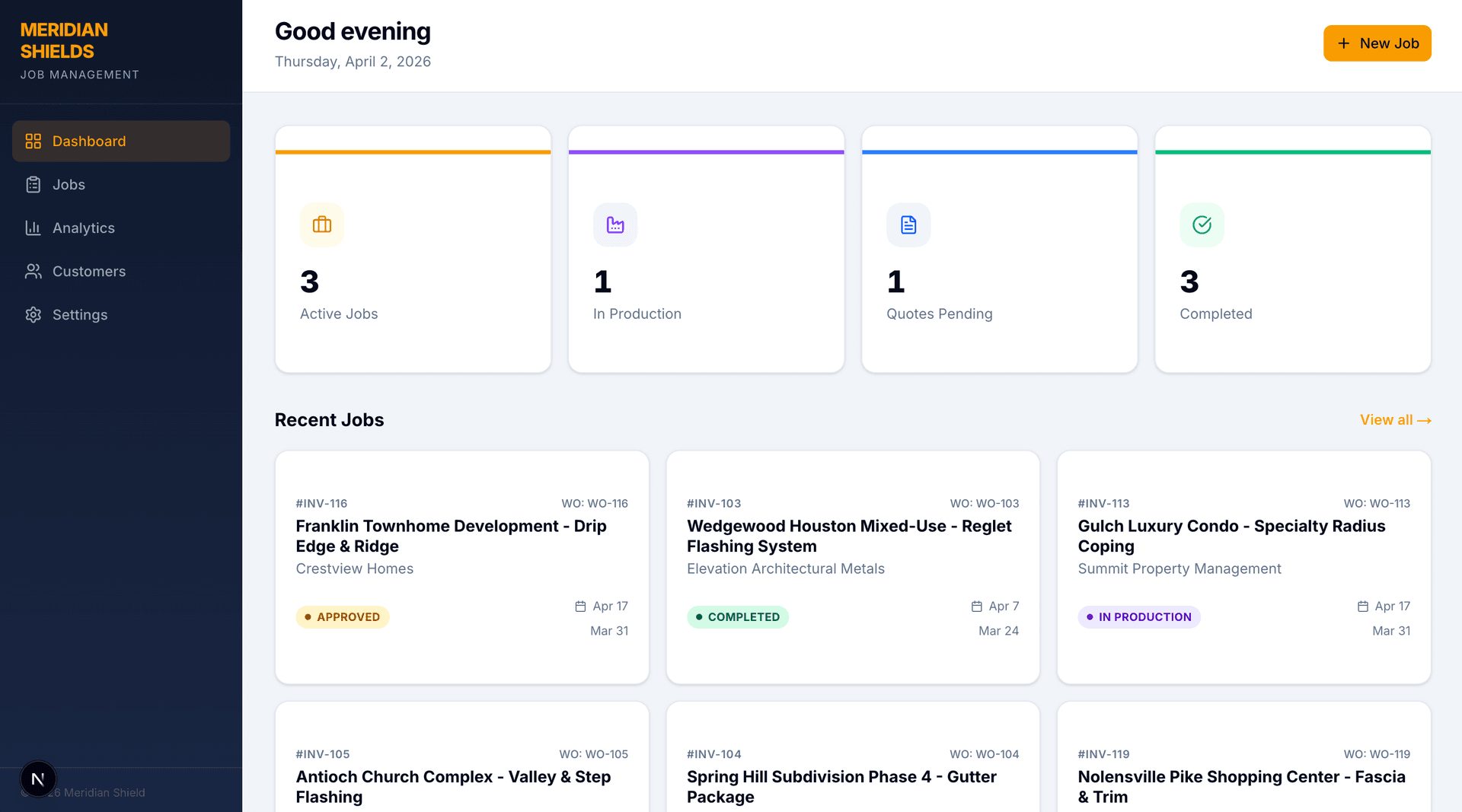
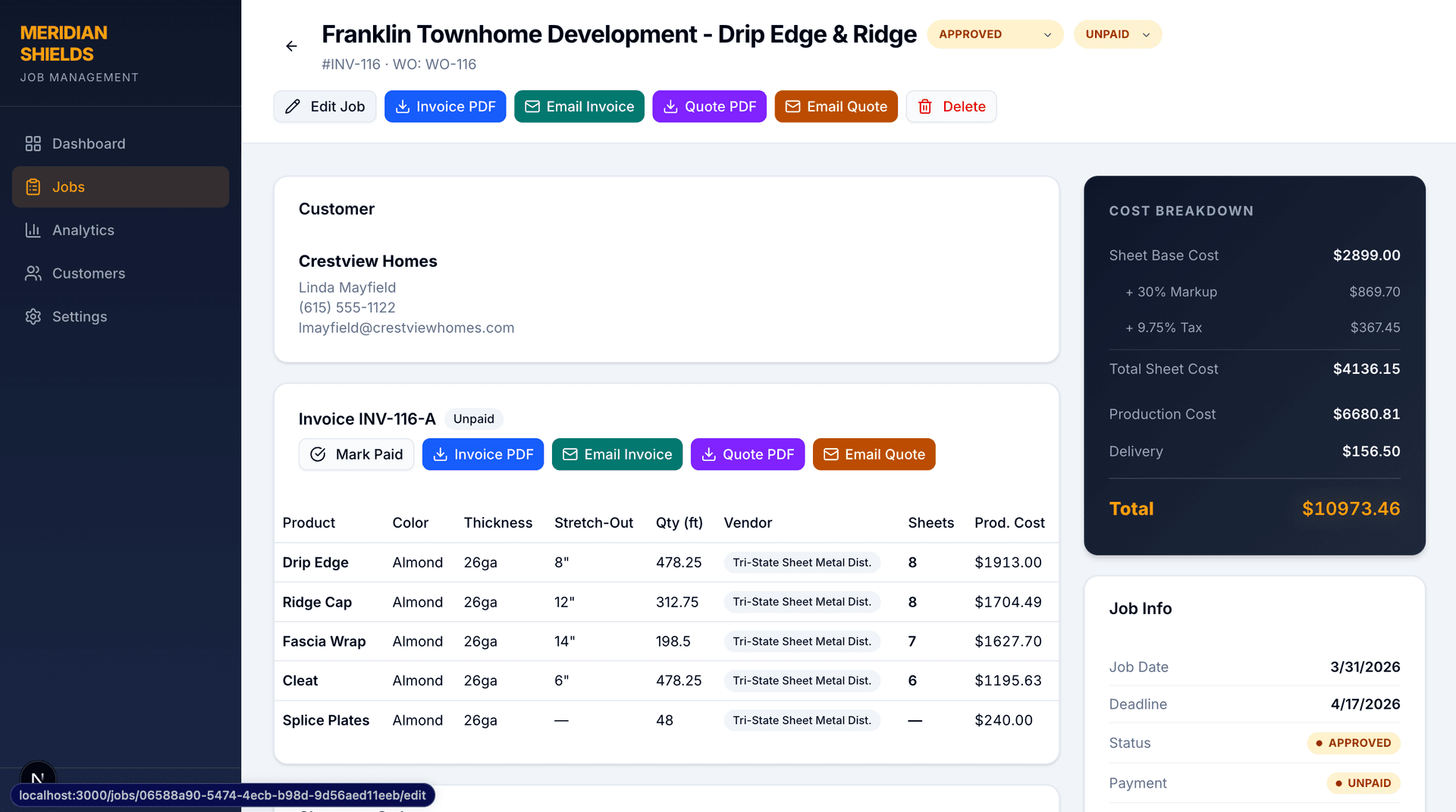
The core piece is a four-step job creation wizard. Step 1 is the customer: search the existing customer list or add new with full contact details inline. Step 2 is production items: pick the product, color, metal thickness, supplier, and linear footage. The system pulls the correct stretch-out and sheet width and calculates sheets needed automatically. Step 3 is job details: name, dates, deadline, delivery price, notes. Step 4 is review: full cost breakdown with markup and tax, ready to send.
The sheet math that used to take 10 minutes per line item happens on keystroke. The formula lives in the code, not in somebody's head. Pieces per sheet equals floor(sheet width divided by stretch-out). Sheets needed equals ceil(linear feet divided by pieces-per-sheet times 10 feet).
On top of that, the system handles what generic tools always miss for a shop like this.
Two-bucket pricing. Sheet cost gets markup and sales tax. Production cost does not. Their accountant needed it split that way for cost-of-goods reporting. No off-the-shelf platform I looked at supported that split cleanly.
Per-customer overrides. Big accounts get custom markup rates, custom tax treatment, and custom per-product pricing. One customer, one price book, applied automatically every quote.
Multi-supplier sheet pulls. A single job might pull from two vendors with different sheet widths and costs. The system aggregates per-vendor subtotals so the shop knows exactly what to order from each.
What Surprised Me Most
The thing I did not expect was how fast the team took to it. A crew that had been running on phone calls and memory for years usually pushes back on new software. They picked it up in days, started trusting it, and folded it into how they already worked instead of fighting it.
That is how you know the system was built the right way. Not by how slick the UI looks. By whether the people using it forget it is there.
The Results
Real numbers from the shop, post-launch.
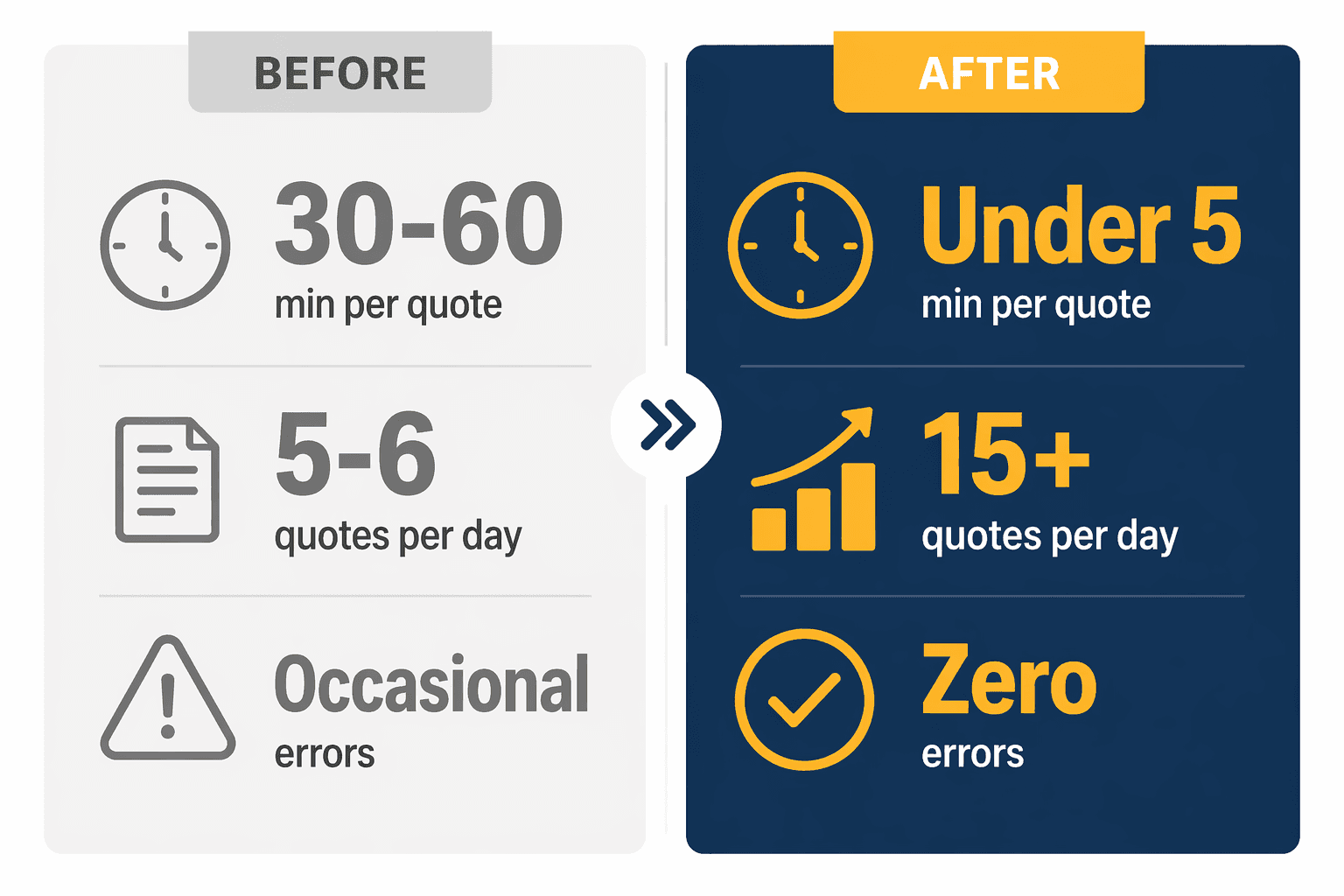
Time per quote went from 30 to 60 minutes down to under 5 minutes. Quote capacity per day went from 5 to 6 up to 15+. Material miscalculations went from occasional margin loss to zero. Payback period was under one month.
The owner's line when we checked in: "We went from spending an hour on every quote to under five minutes. The system paid for itself in the first month."
Three times the quote capacity without hiring. Zero miscalculations on sheet count. A clean split between material and production cost that their accountant actually uses.
Why Off-the-Shelf Software Is the Wrong Answer for a Shop Like This
Meridian did not try and fail with SaaS first. The owner was running everything off his phone and memory. When I looked at the market to see if anything off-the-shelf could fit what he needed, the answer was no. Here is why.
Every category of off-the-shelf quoting software has a gap that matters for edge-metal fabrication.
CAD-based instant quoting platforms assume you get a DXF or STEP file. Commercial roofing bids come as linear footage and profile specs, not CAD drawings.
General-purpose manufacturing quoting software is built for CNC and machine shops quoting parts, not edge metal profiles priced per foot.
Spreadsheet templates with macros work for one estimator who built them. They break the moment a supplier changes sheet widths or a new hire joins.
Generic quoting tools like QuickBooks or standard invoice builders have no sheet math, no two-bucket pricing, and no per-supplier logic. They are a fancy invoice generator.
The pattern is familiar if you run any niche shop. Horizontal SaaS is built for everyone, which means it is built for no one in particular. You bend your operation to fit the tool, or you pay a consultant $25K to customize the tool, and you still do not get the three features you actually needed.
Here is the honest version. Every metal shop is different. You make very particular pieces. Off-the-shelf software is built to be an all-around tool for everyone doing roughly similar work. It covers the first 70% and never fills the last three gaps. The last three gaps are where your margin lives.
Custom software sounds expensive until you compare it to the cost of adapting your process every month forever. A metal shop that quotes wrong once a quarter is paying more in margin leaks than the cost of the build.
How It Actually Works
The stack is boring on purpose. Next.js for the frontend, Supabase for the database, hosted on Vercel. Nothing exotic. The complexity lives in the business logic, not the infrastructure.
The whole system is a job list with filtering and status badges, the four-step wizard for new jobs, a customer database with per-customer pricing overrides, a product catalog with default pricing and unit type (per foot or per piece), a supplier list with sheet widths and costs, and analytics that roll up revenue, customer profitability, and product-level margin.
Boring is the point. The goal was not to ship AI for its own sake. The goal was to take 30 minutes of manual work and turn it into 5. The AI piece is the sheet math and the pricing logic running invisibly in the background. The operator sees a form that takes a quarter of the time.
Where AI Quoting for Metal Fabrication Actually Fits
The shape of this system ports to any business where quoting is the bottleneck and the math is non-trivial.
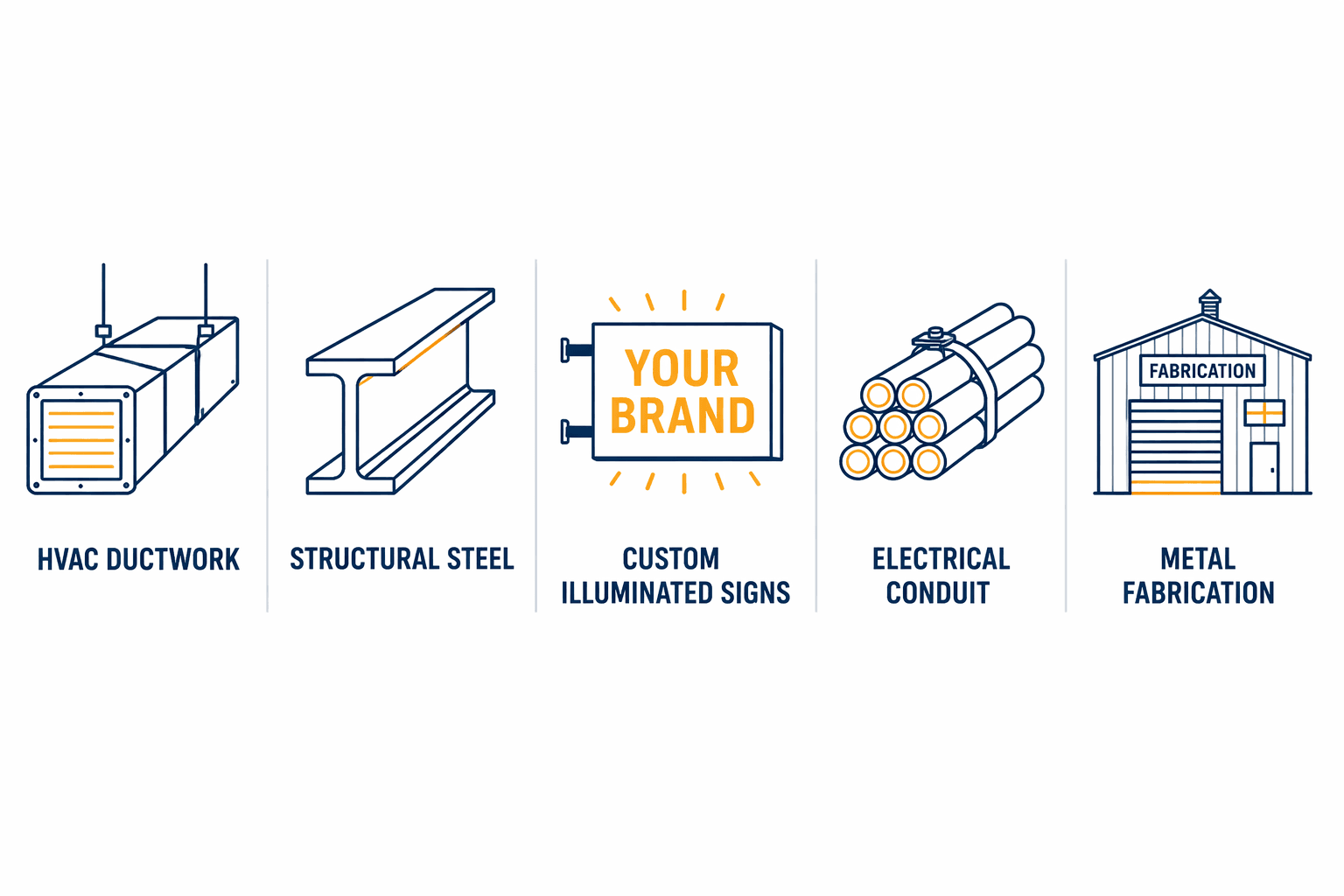
HVAC ductwork fabrication. Sheet math for rectangular duct, spiral pipe, custom fittings. Same stretch-out logic.
Structural steel shops. Per-foot and per-piece pricing with material markups and supplier pulls.
Sign fabrication. Custom sizing, material cost, multi-step production pricing.
Electrical contractors. Labor-per-foot pricing, materials markup, customer-specific rates.
Any trade with supplier-driven material cost plus production labor. The two-bucket pricing model was the unlock. It generalizes.
If that sounds like your shop, the build time is measured in weeks, not months. Six to ten weeks from scoping to live, depending on complexity.
Frequently Asked Questions
How much does a custom AI quoting system cost for a metal fab shop?+
For a small-to-mid-size shop, a system like the one we built for Meridian Shield typically runs $20K to $40K for the build plus a retainer for ongoing support. That is a fraction of what enterprise manufacturing ERPs cost, and it is built for your operation instead of the other way around.
How long does it take to build a quoting system like this?+
Six to ten weeks from kickoff to live for most shops. Two weeks to scope the operation, four to eight weeks to build and test, one week for handoff. The Meridian build fit that window.
Can AI quoting software handle multi-supplier jobs?+
Yes, if it is built to. Most off-the-shelf platforms assume one supplier or one material source. Shops with two to five vendors for the same product need a system that tracks per-vendor cost, sheet width, and availability independently. That is the kind of constraint that usually pushes shops toward custom.
What if our pricing logic is more complex than markup plus tax?+
That is the normal case, not the exception. Per-customer overrides, volume tiers, delivery zones, rush charges, and material surcharges all come up. The logic lives in the code, so anything you can describe in plain English, we can build. Spreadsheets can do this too, until two people disagree about which version is current.
How is this different from CAD-based instant quoting platforms?+
CAD-driven platforms are built for general-purpose machine shops quoting from DXF or STEP files. If your bids come in as linear footage and profile specs (the way commercial roofing, ductwork, structural steel, and most trade fabrication work) a CAD-driven platform does not fit. Custom is built around how your shop actually quotes.
Can we integrate it with our existing tools?+
Depends on the tools. QuickBooks, Stripe, Google Workspace, HubSpot, and most modern SaaS have APIs that integrate cleanly. Older ERP systems can be harder. We scope integrations during the discovery audit so you know what is in and what is out before we start.
What to Do Next
If your shop is still quoting with spreadsheets and tribal knowledge, the math is probably costing you more than you think. Not in software fees. In margin leaks, lost jobs, and capacity caps.
Book a free 30-minute AI audit and we will map where your shop is losing time and what an automated quoting system could actually save. No slide deck. No generic proposal. We will look at your current quote flow, identify the specific bottleneck, and tell you whether a custom build makes sense for a shop your size.
30-minute call on Cal.com. We map your quote bottleneck. No pitch.